Important Things to Consider for Better Recovery of FeSiMg in Ductile Iron Manufacturing
In modern foundry operations, producing high-quality ductile iron requires precise metallurgical control. One of the most important materials used in this process is Ferro Silicon Magnesium (FeSiMg). This alloy is essential for transforming the graphite structure in molten iron from flakes to spheroidal (nodular) form, which significantly improves the mechanical properties of cast iron.

However, simply adding FeSiMg to molten iron does not guarantee optimal results. The recovery rate of FeSiMg—the amount of magnesium effectively utilized during treatment—plays a major role in achieving consistent ductile iron quality. Poor recovery can lead to magnesium loss, inconsistent nodularity, higher alloy consumption, and increased production costs.
For foundries and metallurgical industries, improving the recovery of FeSiMg is not only a technical requirement but also a cost-optimization strategy. By understanding the factors that influence magnesium recovery, manufacturers can achieve better efficiency, improved casting quality, and more predictable results in ductile iron production.
This article explores the important things to consider for better recovery of FeSiMg in ductile iron manufacturing and how foundries can optimize their treatment processes.
Understanding the Role of FeSiMg in Ductile Iron
Before discussing recovery factors, it is important to understand why FeSiMg is critical in ductile iron production.
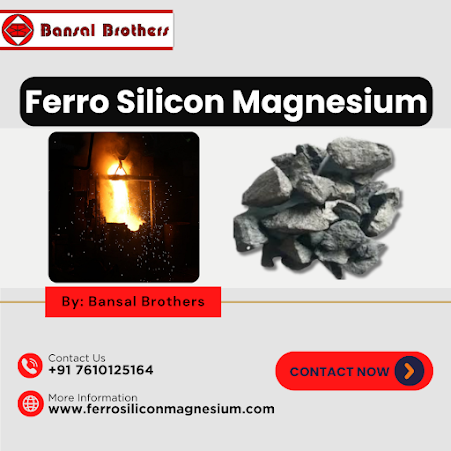
FeSiMg is an alloy containing silicon, magnesium, and sometimes rare earth elements. When introduced into molten iron, magnesium reacts with sulfur and oxygen while altering the graphite structure. This transformation leads to the formation of spheroidal graphite, which provides ductile iron with superior strength, toughness, and elongation compared to gray iron.
However, magnesium is highly reactive and volatile at high temperatures. During treatment, part of the magnesium can be lost due to reactions with impurities and atmospheric oxygen. Therefore, foundries focus on achieving High Recovery For Ferro Silicon Magnesium to ensure efficient magnesium utilization and stable ductile iron quality.
Quality and Composition of FeSiMg
One of the most important factors influencing recovery is the quality of FeSiMg used in the process. High-grade alloys with consistent composition ensure predictable magnesium release during treatment.
Impurities, inconsistent magnesium content, or excessive oxidation in the alloy can lead to inefficient reactions and reduced recovery. Foundries should source FeSiMg from reliable suppliers that maintain strict quality control and standardized alloy compositions.
Additionally, different grades of FeSiMg are available depending on magnesium content and rare earth elements. Selecting the right grade based on the foundry’s process conditions can significantly improve recovery and nodularization efficiency.
Control of Sulfur Content in Base Iron
The sulfur level in molten iron directly affects FeSiMg recovery. Magnesium reacts strongly with sulfur, forming magnesium sulfide. When sulfur content is high, a larger portion of magnesium is consumed during desulfurization rather than contributing to graphite nodularization.
For better recovery, foundries must ensure that base iron sulfur levels are kept as low as possible before magnesium treatment. Pre-desulfurization processes are often used to reduce sulfur levels, allowing FeSiMg to perform its primary function of nodularizing graphite rather than neutralizing sulfur.
Lower sulfur content improves magnesium efficiency and reduces overall alloy consumption.
Treatment Temperature of Molten Iron
Temperature control is another crucial factor affecting magnesium recovery. Magnesium has a relatively low boiling point compared to molten iron temperatures, which means excessive heat can cause magnesium to vaporize rapidly.
If the molten iron temperature is too high during treatment, a significant portion of magnesium may be lost through evaporation. On the other hand, if the temperature is too low, the alloy may not dissolve properly.
Maintaining the optimal treatment temperature helps ensure that FeSiMg dissolves efficiently while minimizing magnesium loss. Many foundries carefully monitor temperature ranges during treatment to maintain consistent recovery rates.
Treatment Method and Process Design
The method used to introduce FeSiMg into molten iron also affects recovery efficiency. Several treatment methods are commonly used in ductile iron production, including:
Sandwich method
Tundish cover method
Converter method
Cored wire injection
Each method offers different levels of control over magnesium reaction and recovery. For example, the sandwich method is widely used because it allows FeSiMg to react within a confined area of molten iron, reducing magnesium loss and improving recovery.
Proper process design and treatment techniques can significantly increase magnesium utilization while ensuring safe and controlled reactions.
Particle Size and Alloy Form
The physical form and particle size of FeSiMg influence how efficiently it reacts with molten iron.
Alloys that are too fine may react too quickly, leading to violent reactions and magnesium loss. On the other hand, very large lumps may dissolve slowly and fail to react fully before the metal is poured.
Using properly sized FeSiMg lumps or granules ensures a controlled reaction rate and better magnesium utilization. Consistent particle size also helps maintain predictable treatment results across different batches.
Slag Control and Clean Molten Iron
Slag formation in molten iron can interfere with magnesium recovery. Excessive slag can trap magnesium or prevent proper interaction between the alloy and molten iron.
Maintaining clean molten iron and effective slag control is essential for improving FeSiMg recovery. Foundries often use slag removal techniques before magnesium treatment to create a cleaner reaction environment.
This step not only improves magnesium efficiency but also enhances the overall quality of the final Ductile Iron Treatment.
Proper Alloy Addition Timing
The timing of FeSiMg addition also plays a key role in recovery. If the alloy is added too early, magnesium may react or dissipate before the iron is poured into molds.
Ideally, magnesium treatment should occur close to the casting process so that the nodularizing effect remains active during pouring. Proper timing ensures that magnesium remains effective and contributes to the desired graphite structure.
Consistent timing in the treatment process helps maintain stable recovery rates and uniform casting properties.
Skilled Process Control and Operator Expertise
Even with high-quality materials and advanced equipment, successful FeSiMg recovery depends heavily on experienced operators and proper process control.
Trained foundry professionals understand how to adjust treatment conditions based on factors such as temperature variations, alloy composition, and base iron chemistry. Their expertise ensures that magnesium reactions occur efficiently and safely.
Regular monitoring of magnesium recovery rates and continuous process improvement are essential practices in modern ductile iron foundries.
Benefits of Higher Recovery of FeSiMg
When foundries successfully optimize FeSiMg recovery, they gain several operational and economic advantages.
Higher recovery leads to reduced alloy consumption, which directly lowers production costs. It also improves process stability, ensuring consistent nodular graphite formation in ductile iron.
Additionally, better magnesium utilization contributes to improved mechanical properties in cast components, such as higher strength, toughness, and durability. This is particularly important for industries such as automotive, construction, infrastructure, and heavy machinery.
By focusing on recovery optimization, foundries can achieve both metallurgical excellence and operational efficiency.
Conclusion
The recovery of FeSiMg is a critical factor in the successful production of ductile iron. Since magnesium is highly reactive and prone to losses during treatment, foundries must carefully control various aspects of the process to achieve optimal results.
Key considerations such as alloy quality, sulfur control, treatment temperature, process method, particle size, slag management, and operator expertise all play significant roles in improving recovery rates.
For foundries and metallurgical industries, focusing on these factors can lead to better magnesium efficiency, lower production costs, and consistently high-quality ductile iron castings.
As global demand for high-performance cast iron components continues to grow, optimizing FeSiMg recovery will remain an important priority for modern foundry operations.
#FerroSiliconMagnesium #HighRecoveryForFerroSiliconMagnesium #DuctileIronTreatment


Comments
Post a Comment