Why Improper Nodulariser Selection Affects Ductile Iron Treatments
In ductile iron production, consistency is everything. Mechanical strength, elongation, fatigue resistance, and machinability all depend on one critical process: proper nodularisation. While many foundries focus on melting practice and pouring temperature, a common yet costly mistake lies elsewhere—improper nodulariser selection.

Nodularisers, especially ferro silicon magnesium, play a decisive role in transforming graphite from flake to spheroidal form. When the wrong nodulariser is chosen, ductile iron treatments suffer, leading to defects, higher scrap rates, and unpredictable metallurgical results.
This article explains why nodulariser selection matters, how improper choice impacts ductile iron treatments, and what foundries can do to achieve reliable, repeatable outcomes.
Understanding Nodularisation in Ductile Iron
What Is Nodularisation?
Nodularisation is the metallurgical process that converts graphite flakes into spheroidal (nodular) graphite within cast iron. This transformation dramatically improves:
Tensile strength
Ductility
Impact resistance
Fatigue life
Without effective nodularisation, cast iron behaves like grey iron—brittle and unsuitable for structural applications.
Role of Ferro Silicon Magnesium in Ductile Iron Treatments
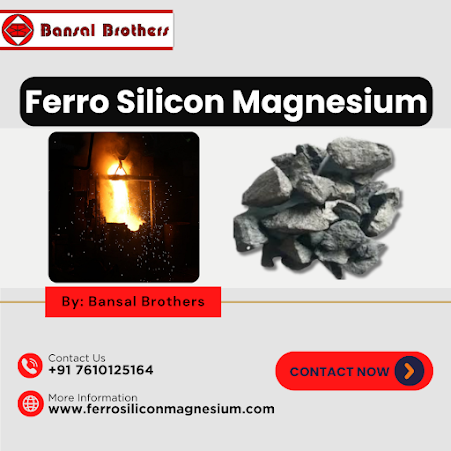
The most widely used nodulariser in ductile iron production is Ferro Silicon Magnesium. It contains a controlled amount of magnesium combined with silicon and sometimes rare earth elements.
Why Ferro Silicon Magnesium Is Preferred
Ferro silicon magnesium is used because it:
Delivers controlled magnesium recovery
Promotes uniform graphite nodules
Supports stable nodularity across different section sizes
Improves base iron cleanliness
However, not all ferro silicon magnesium nodularisers perform the same, and selecting the wrong grade can seriously impact treatment results.
What Happens When Nodulariser Selection Is Improper?
Improper nodulariser selection does not always cause immediate failure—but it creates hidden inefficiencies that affect long-term quality and cost.
Key Ways Improper Nodulariser Selection Affects Ductile Iron Treatments
1. Poor Graphite Nodularity
One of the first signs of improper nodulariser selection is incomplete or irregular graphite formation.
This happens when:
Magnesium content is too low or too high
Rare earth balance is incorrect
Recovery rate is unstable
As a result:
Graphite nodules become irregular or chunky
Flake graphite may reappear
Mechanical properties fall below specification
Even with correct pouring practice, poor nodularisation cannot be corrected later.
2. Inconsistent Magnesium Recovery
Ferro silicon magnesium must release magnesium at a controlled rate. Improper nodulariser grades may cause:
Excessive magnesium fade
Violent reactions during treatment
Low effective magnesium in final iron
This leads to:
Treatment variability from ladle to ladle
Higher nodulariser consumption
Frequent chemistry corrections
In B2B production environments, this inconsistency increases downtime and operational risk.
3. Increased Sensitivity to Sulphur Levels
Base iron sulphur content strongly affects nodularisation. Improper nodulariser selection can:
Fail to neutralize sulphur effectively
Require higher magnesium addition
Increase slag formation
This results in:
Reduced nodularity
More inclusions
Lower casting quality
A properly matched ferro silicon magnesium nodulariser minimizes sulphur-related issues.
4. Higher Inclusion Formation
Incorrect nodularisers often introduce or promote:
Magnesium oxides
Silicates
Complex slag inclusions
These inclusions:
Act as crack initiation points
Reduce fatigue strength
Lower pressure-tightness
Even when nodularity appears acceptable, internal defects may cause failures in service.
5. Poor Mechanical Property Consistency
Improper nodulariser selection leads to wide variation in:
Tensile strength
Elongation
Hardness
This makes it difficult to meet:
Automotive standards
Pressure pipe specifications
Export quality requirements
Inconsistent results affect customer confidence and long-term contracts.
6. Increased Scrap and Rework
From a business perspective, the biggest impact is cost.
Poor nodularisation caused by wrong ferro silicon magnesium selection leads to:
Higher rejection rates
More re-melting
Increased energy consumption
Longer production cycles
Over time, these hidden losses significantly reduce profitability.
Why Foundries Often Overlook Nodulariser Selection
Many foundries treat nodulariser procurement as a price-driven decision, assuming all ferro silicon magnesium products behave similarly.
Common mistakes include:
Choosing nodularisers based only on Mg percentage
Ignoring rare earth balance
Using one grade for all casting types
Not considering treatment method (sandwich, tundish, in-mold)
This approach ignores the complex interaction between base iron chemistry and nodulariser performance.
Best Practices for Effective Ductile Iron Treatment
To avoid problems caused by improper nodulariser selection, foundries should adopt the following best practices:
Analyze Base Iron Chemistry
Understand sulphur, oxygen, and residual elements before selecting ferro silicon magnesium.
Match Nodulariser to Treatment Method
Different treatment methods require different nodulariser characteristics.
Monitor Magnesium Recovery
Track recovery rates to identify inefficiencies early.
Avoid Over-Treatment
Excess magnesium does not improve nodularity—it increases defects.
Use Consistent, Tested Materials
Consistency in nodulariser quality ensures consistent casting performance.
Importance of Technical Support in Nodulariser Selection
Proper nodulariser selection is not a one-size-fits-all decision. It requires:
Metallurgical understanding
Process knowledge
Continuous monitoring
B2B buyers benefit most when working with suppliers who provide technical guidance, not just material supply.
The Strategic Role of Ferro Silicon Magnesium in Modern Foundries
As ductile iron applications become more demanding, the margin for error decreases. Infrastructure, automotive, and engineering components require:
Predictable properties
Low defect rates
Long service life
The correct selection of ferro silicon magnesium nodulariser becomes a strategic advantage, enabling foundries to deliver consistent quality at controlled cost.
Conclusion: Right Nodulariser Selection Is Key to Reliable Ductile Iron Treatments
Improper nodulariser selection directly affects every stage of Ductile Iron Treatment—from graphite formation to final mechanical performance.
By understanding the critical role of ferro silicon magnesium and selecting the right nodulariser for each application, foundries can:
Improve nodularity
Reduce defects
Lower production costs
Strengthen customer trust
In ductile iron manufacturing, success begins with the right metallurgical choices.
#Nodularisers #DuctileIronTreatment #FerroSiliconMagnesium


Comments
Post a Comment