How Should Foundries Handle High Sulphur Metal During S G Iron Treatment?
Sulphur control remains one of the most critical challenges in S G iron production. Many foundries today work with high-sulphur base metal due to scrap availability, cost pressure, and raw material variability. But the big question remains:

How should foundries handle high-sulphur metal during S G iron treatment without compromising quality, nodularity, and cost efficiency?
This blog explores the practical, metallurgical, and business-focused answers—with a special focus on S G Iron Treatment with High Sulphur Metal, the role of Ferro Silicon Magnesium, and how to achieve consistent Mg recovery in real foundry conditions.
Why Is High Sulphur a Major Concern in S G Iron Treatment?
Sulphur is a strong magnesium-consuming element. During S G iron treatment, magnesium reacts aggressively with sulphur before it can perform its primary role—graphite spheroidization.
Key problems caused by high sulphur metal:
Excessive magnesium loss
Poor nodularity
Inconsistent mechanical properties
Higher treatment costs
Increased process instability
From a B2B and production standpoint, uncontrolled sulphur directly impacts:
Casting rejection rates
Alloy consumption
Production predictability
Customer confidence
That’s why handling high sulphur metal is not optional—it’s essential.
What Sulphur Levels Are Acceptable for Effective S G Iron Treatment?
One of the most common questions asked by foundry managers is:
How much sulphur is too much?
While exact limits depend on process and alloy quality, general industry benchmarks suggest:
Preferred sulphur before treatment: ≤ 0.02%
Manageable sulphur with proper strategy: 0.02% – 0.05%
High risk zone: > 0.05%
When sulphur exceeds safe limits, achieving Consistent Mg Recovery becomes difficult—even with higher Ferro Silicon Magnesium addition.
Can Foundries Treat High Sulphur Metal Successfully?
Yes—but only with the right strategy.
Foundries that succeed with S G Iron Treatment with High Sulphur Metal focus on control, preparation, and alloy selection, rather than trial-and-error.
Let’s break this down step by step.
Step 1: Why Pre-Treatment Desulphurization Matters
The first and most effective way to handle high-sulphur metal is desulphurization before magnesium treatment.
Common desulphurization methods:
Calcium carbide injection
Lime-based desulphurization
Synthetic slag treatment
Business advantage:
Reduces Ferro Silicon Magnesium consumption
Improves Mg recovery
Stabilizes production
Lowers overall treatment cost
Foundries that skip this step often pay more later, through higher alloy usage and rejections.
Step 2: How Does Ferro Silicon Magnesium Help in High Sulphur Conditions?
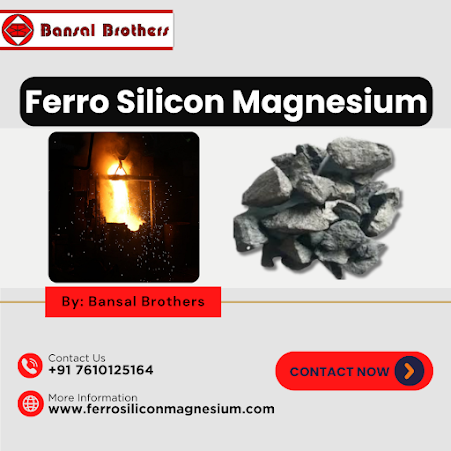
Ferro Silicon Magnesium is the backbone of S G iron treatment. However, not all FeSiMg alloys perform equally when sulphur levels are high.
What foundries should look for:
Controlled Mg percentage
Low aluminum and rare earth balance
Stable reaction behavior
Predictable Mg recovery
Using inconsistent or low-quality FeSiMg can result in:
Violent reactions
Low nodularity
Uneven graphite structure
This is where supplier reliability becomes a strategic decision, not just a purchase choice.
How Can Foundries Achieve Consistent Mg Recovery with High Sulphur Metal?
This is one of the most important B2B questions.
Consistent Mg recovery means:
Predictable alloy consumption
Stable microstructure
Repeatable casting quality
Key factors influencing Mg recovery:
Initial sulphur level
Treatment temperature
Method of treatment (sandwich, tundish, wire injection)
Quality of Ferro Silicon Magnesium
Reaction control and slag removal
Even with high-sulphur metal, foundries can achieve stable results by optimizing all five factors together, rather than adjusting only Mg addition.
Why Treatment Method Matters More with High Sulphur Metal
High sulphur increases reaction intensity. Choosing the wrong treatment method can lead to:
Excessive fume loss
Magnesium burn-off
Safety risks
Preferred methods for high sulphur metal:
Sandwich method with proper cover
Tundish cover with a controlled reaction chamber
These methods improve magnesium utilization, making them ideal for managing sulphur-heavy melts.
What Role Does Process Discipline Play?
One overlooked aspect is process consistency.
Foundries struggling with sulphur-related issues often face:
Inconsistent charge mix
Variable scrap quality
Poor temperature control
Handling high sulphur metal is not only a metallurgical challenge—it’s an operational discipline challenge.
Successful foundries:
Monitor sulphur at every stage
Standardize treatment practices
Train operators on reaction control
How Can Alloy Suppliers Support Better Results?
This brings us to the supplier’s role.
Why M/S Bansal Brothers Matters
M/S Bansal Brothers is a trusted name in Ferro Silicon Magnesium and S G iron treatment solutions. Their focus on:
Consistent alloy chemistry
Reliable Mg recovery behavior
Foundry-specific technical understanding
helps customers handle S G Iron Treatment with High Sulphur Metal more confidently.
For B2B buyers, this means:
Reduced trial costs
Better production planning
Long-term process stability
A reliable alloy partner is not just a vendor—it’s a process enabler.
Is Increasing Magnesium Addition a Good Solution?
This is a common but costly mistake.
Simply increasing FeSiMg addition:
Raises cost
Increases slag volume
Causes reaction instability
Without sulphur control, extra magnesium mostly gets consumed by sulphur, not graphite formation.
Smart sulphur management always beats higher alloy addition.
How Should Foundry Decision-Makers Approach High Sulphur Challenges?
From a management perspective, the right questions to ask are:
Are we measuring sulphur consistently?
Are we using the right grade of Ferro Silicon Magnesium?
Is our Mg recovery predictable?
Are we treating symptoms or solving root causes?
Foundries that ask the right questions achieve better margins and fewer surprises.
Frequently Asked Questions (FAQs)
What is S G Iron Treatment with High Sulphur Metal?
S G Iron Treatment with High Sulphur Metal is the magnesium treatment of ductile iron when the base metal contains elevated sulphur levels. High sulphur reacts with magnesium first, reducing its effectiveness for graphite spheroidization unless sulphur is properly controlled before treatment.
Why is high sulphur a problem during S G iron treatment?
High sulphur consumes magnesium rapidly, leading to low magnesium recovery, poor nodularity, and inconsistent mechanical properties. It also increases Ferro Silicon Magnesium consumption and treatment cost, making sulphur control critical for stable and economical S G iron production.
What is the ideal sulphur level before S G iron treatment?
For effective S G iron treatment, sulphur should ideally be 0.02% or lower before magnesium addition. Higher sulphur levels can still be managed, but they require proper desulphurization and high-quality Ferro Silicon Magnesium to maintain consistent Mg recovery.
How does Ferro Silicon Magnesium help in high-sulphur metal?
Ferro Silicon Magnesium supplies magnesium needed for spheroidization. When properly designed, it reacts in a controlled manner, improves magnesium recovery, and supports nodular graphite formation—even in high sulphur metal—especially when supplied by experienced manufacturers like M/S Bansal Brothers.
Can consistent Mg recovery be achieved with high sulphur metal?
Yes. Consistent Mg recovery can be achieved through pre-treatment desulphurization, correct treatment temperature, controlled treatment methods, and the use of high-quality Ferro Silicon Magnesium. Managing sulphur before treatment is more effective than increasing magnesium addition.
Is increasing magnesium addition the right solution for high sulphur?
No. Increasing magnesium addition raises cost, slag volume, and process instability. Without sulphur control, most of the added magnesium is consumed by sulphur rather than improving nodularity. Proper sulphur management is a more efficient and reliable solution.
Which treatment method works best for high-sulphur metal?
For high-sulphur metal, sandwich and tundish cover methods work best. These methods reduce magnesium loss, control reaction intensity, and improve Mg recovery, making them suitable for stable S G iron treatment under challenging sulphur conditions.
How does sulphur control improve S G iron quality?
Effective sulphur control improves magnesium recovery, nodularity, microstructure consistency, and mechanical properties. It also reduces Ferro Silicon Magnesium consumption, lowers rejection rates, and ensures predictable casting performance in S G iron production.
How does M/S Bansal Brothers support S G iron treatment with high-sulphur metal?
M/S Bansal Brothers supplies consistent-quality Ferro Silicon Magnesium designed for stable reactions and predictable Mg recovery. Their alloys help foundries manage high-sulphur metal efficiently, reduce process variation, and achieve reliable S G iron treatment results.
Final Thoughts: Turning High Sulphur into a Manageable Variable
High sulphur metal is no longer unusual—it’s a reality of modern foundry operations. The key is not avoiding it, but handling it intelligently.
With:
Proper desulphurization
High-quality Ferro Silicon Magnesium
Controlled treatment methods
Focus on consistent Mg recovery
Support from experienced suppliers like M/S Bansal Brothers
foundries can successfully manage S G Iron Treatment with High Sulphur Metal while maintaining quality, efficiency, and profitability.
#SGIronTreatmentWithHighSulphurMetal #ConsistentMgRecovery #FerroSiliconMagnesium


Comments
Post a Comment